BY TUESDAY MASAKI
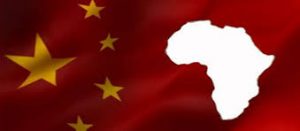
There is a new scramble for Africa but the difference with this one is that it is fueled by the perpetrators as well as the victims. Long gone are the days when Africa was curved up at Berlin Conference 1884-85, in meeting called by Portugal and organised by Otto von Bismarck. Africa still lives with the consequences of its outcome, the General Act of the Berlin Conference, which has had an effect on how Africa has related with global community till today. That relationship between Africa and Europe was asymmetrical leaving the latter better off with the import of cheap raw material and the former lacking meaningful social,economic and political structures in place after the end of colonialism. It is these weak structures and lack of accountable institutions that now allow a mutual, ‘symmetrical’ relationship fueled by avarice to flourish between between Africa and the global community more specifically China.
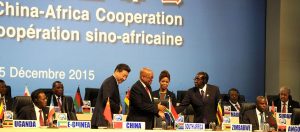
This avarice looks quite reasonable when we examine it through the prism of mutual trade agreements which China for example signs with African states. China has actually been quite fair to African countries by not imposing conditions like Structural Adjustment Policies which African countries had and must follow in order to qualify for loans from for example the IMF. The main issue with the trade agreements that China has with African states is that African leaders are not doing them in the best interest of their people but rather for themselves. China on their part don’t mind giving kickbacks and cutting corners if they get favorable access to mineral resources and a market for their finished goods in these African countries. The low cost China offers for tenders of big infrastructural tenders means this relationship between Africa and China is bound to continue as African countries seek to develop their fledgling economies while balancing the pressures of competing in a cutthroat global economy. This lack of strategy and interest in only personal gain rather than national interest by the leadership of the various government institutions, ministries and ultimately heads of state means Africa is negotiating trade policies with the wrong objectives in mind. The irony is China for example is a one party state while most African states they trade with have multi-party systems. The multiple political parties within African states through ethnic kinship and cronyism battle for the resources left post colonialism at the expense of national interest. China with the help of the one party state act as a unit in planning and executive to achieve is foreign policy objectives. This contradiction serves to compounds the crisis of identity of African foreign policy from the domestic structures of local politics, governance and economic development which form policy to the global ideological structures of economic principles and political philosophies among which states are forced to chose in order to survive the anarchic global system.
With the national economic interest of African states at stake, leaders need to fight the enemy within, corruption, cronyism and misappropriation of government resources. This step will first stem the waste of already scarce resources through for example practices such as the inflation of tender prices for state infrastructure projects. Africa in general needs a paradigm shift in the area of National Security by securitizing their national resources against plunder from within and outside their sovereign borders. More than territorial sovereignty, the economic sovereignty of African states should be among at the top most core objectives of African foreign policy in the 21st century.
Other areas such as the environmental security of Africa’s natural resources are and will suffer if we do not take action. Economic decisions need to be examined via a fair and balanced cost-benefit analysis on how the business practices of foreign trade partners may affect Africa’s natural resources. This is relevant for example when dealing with issues on environmental pollution, sustainable utilization of natural resources and wildlife conservation. A vivid illustration of this statement is the plan by the Kenyan government to build East Africa’s first coal plant near the coastal town of Lamu. Firstly, this decision does not make sense because the plant will pollute an environmentally pristine ecosystem and beach which is a tourist attraction, secondly Kenya already has a diverse portfolio of alternative energy sources which are clean and sustainable for example geothermal, natural gas, wind – such as the Lake Turkana Wind Farm and a solar photovoltaic (PV) project in the northeastern city of Garissa. It will be fair to acknowledge that some of these energy alternatives are not immediately viable but in the context of strategy for future competitiveness in the global economy which is moving away from coal and non renewable energy sources like fossil fuel to renewable energy sources like wind and solar, Kenya is making a bad decision.
More than ever African foreign policy analysts, theorists and practitioners are needed to provide strategies that protect African states in the current competitive and anarchic global economy. Objectives need to be in place and irrespective of which political party is in power they need to implemented to the end. Even with democratic elections and adoption of liberal economy principles, Africa still risks stagnation and achieving minimal progress overall in the 21st century. In the global economy we know who are our competitors, we also know their strengths and weaknesses, we know the structure and operating environment of the Global economy, but most important we know our own strengths and weaknesses. Africa needs to wage a war with the enemy within only then will the enemy outside be tamed.
Author works as a Foreign Policy Analyst for Kineni Consulting. www.kinenigroup.com